
Bark & Meow: Quest for the Crown
- Genre: Strategy Racing Board Game
- Type: Proof-of-concept Prototype
- Engine: Tabletop Simulator
- Tools: Miro, Procreate, Nomad
- Iterations # 8
- Playtests # 7
Role:Game designer (Research and concept, documentation, prototype, implement, balance, utilize)
Iterations Overview
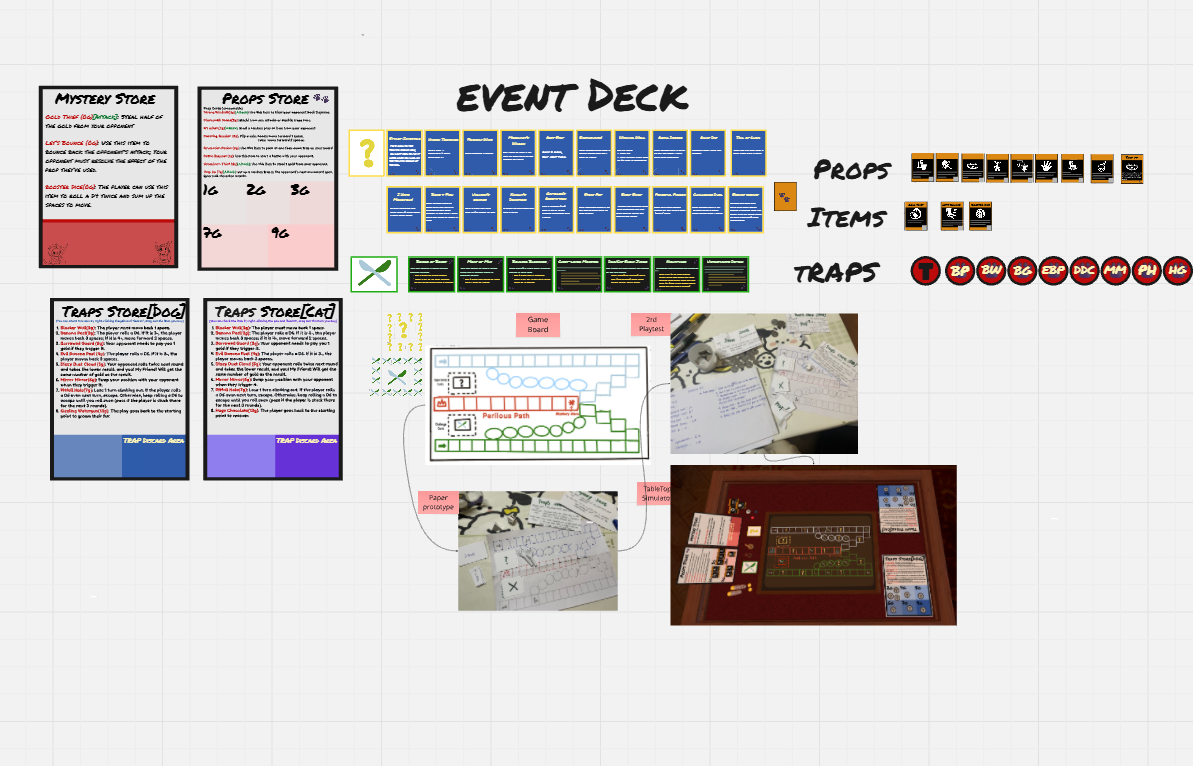
Goal
My goal for Meow &Bark was to be a short, easy to follow, and having a clear development process game project to create a fun and competitive game with the following theme,
- Racing game – some of the most fun experience playing this game is to race and compete with my friends. I can sense the intense during the game, but a lot of laugh going on along as well.
- Scheming & Sabotage – I also wanted to empower the player with the skill of setting up the obstacle to slower down each other’s pace, it was such a great moment when a set of trap was triggered by my oppoent.
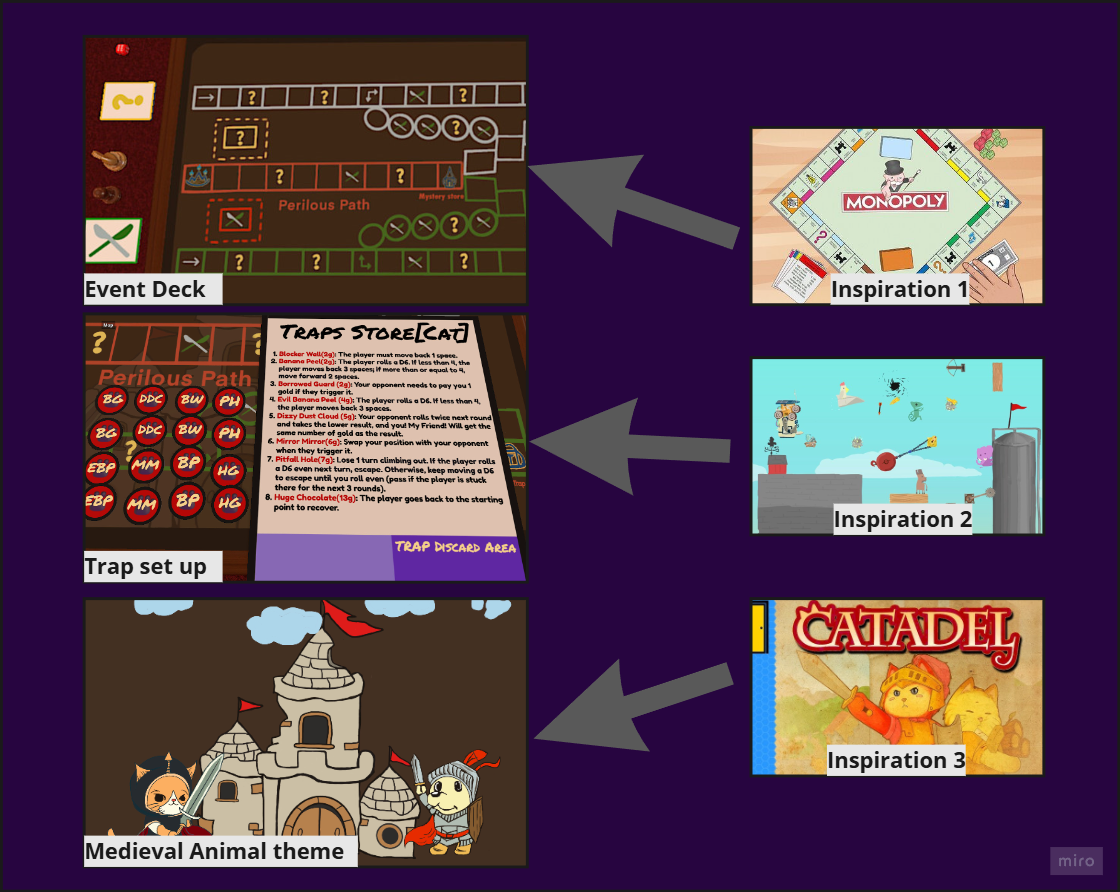
- Medieval Dog vs. Cat themed – I really like these little cute animal, so I want to make this game a combination of dark but cute.
Throughout this process, I sought regular feedback from Jeremiah Franczyk (The Lord of the Ring) and Kelly Bender (Assassin’s Creed Odyssey, The Walking Dead: Survivors), who helped me learn the value of clarity and reasonance.
Overview & Technique Highlights
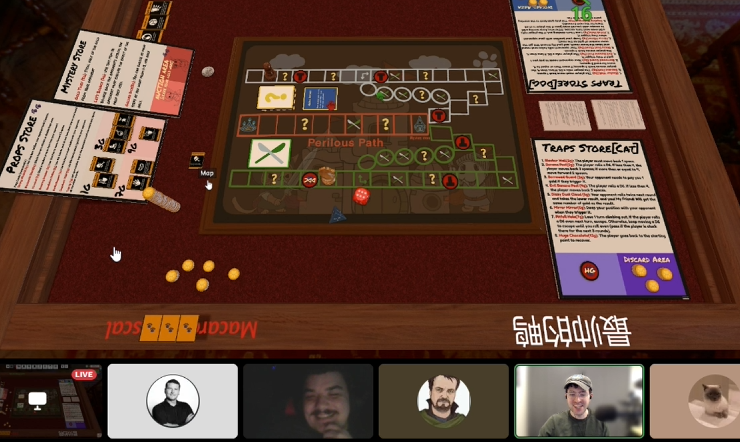
Game Premise: In the Medieval age, there were two of the most powerful kingdoms that started wars with each other over hundreds of years; they are the Dog and Cat Clans. You are playing as a dog advanturer or a cat knight to get the Triumph Crown before your enemy, the power of the crown can help your kingdom conquer the other kingdoms. To win the Crown, you have to manage your resources and make the right decision, and also try your best to slow down your enemy.
Combining with luck and strategy, this game is a competitive racing game for 2 players; they must use their wits to drag their opponent’s pace and move faster to get the Triumph Crown.
Technique Highlight #1: Trap setting up Mechanic
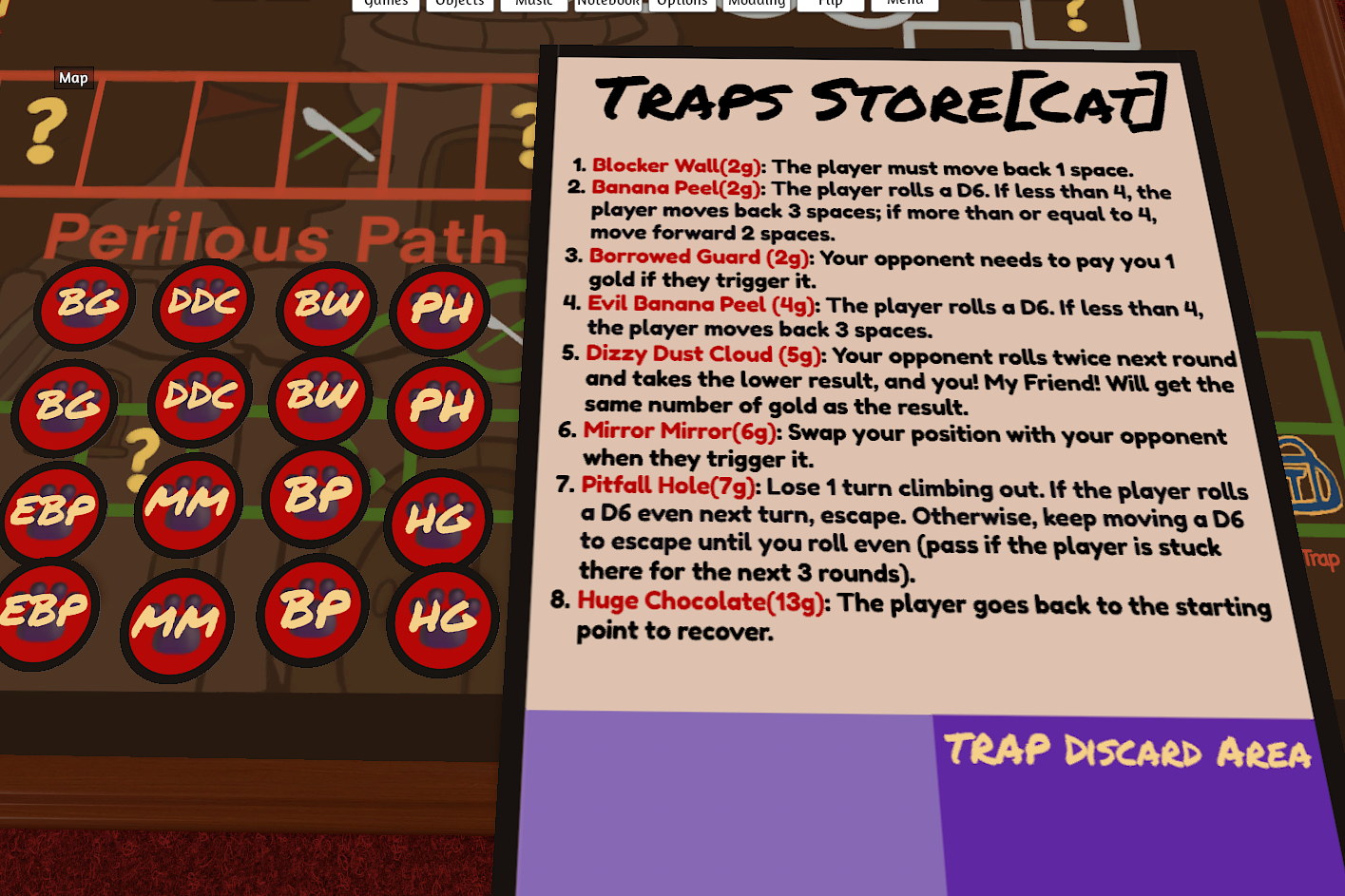
Goal: I wanted to create an interesting decisions for the players by giving them resources that they can build obstable to slow down their opponent.
Result: I chose to add the “Trap Store” mechanic that the player can shop on it at the start of the game.
Techniques
- Creating different kind of traps with different interesting effect that resulting unpredictable interesting effect.
- We set up different prices for the traps according to the power of the effect.
- Player can make different decisions in the Trap Purchasing; some might spend all of the dime to buy traps, and some might keep the gold for the game, which is conditional. The best decision is not to miss the purchase, and keep a few gold for the game later on.
Technique Highlight #2: Prop Purchasing Mechanic
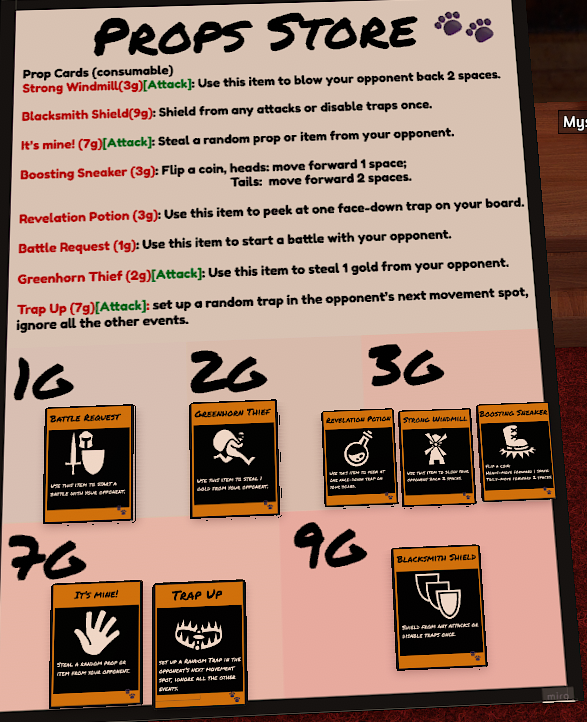
Goal: I wanted to create a more fierce competition atmosphere and adding more uncertainty by giving them a range of good options to buy from on their turns.
Result: The prop mechanic add more interactions for the players and adding a good chance to spend their gold to either attack their opponent or shielding from the attack.
Techniques
- Offering a variety of props with different costs and effects so players must make meaningful choices based on their gold and situation.
- Using limited, consumable props to create uncertainty and prevent any single strategy from becoming dominant.
- Designing props that encourage direct player interaction, such as attacking, stealing, or defending, to keep the competition fierce.
Technique Highlight #3: Event Deck
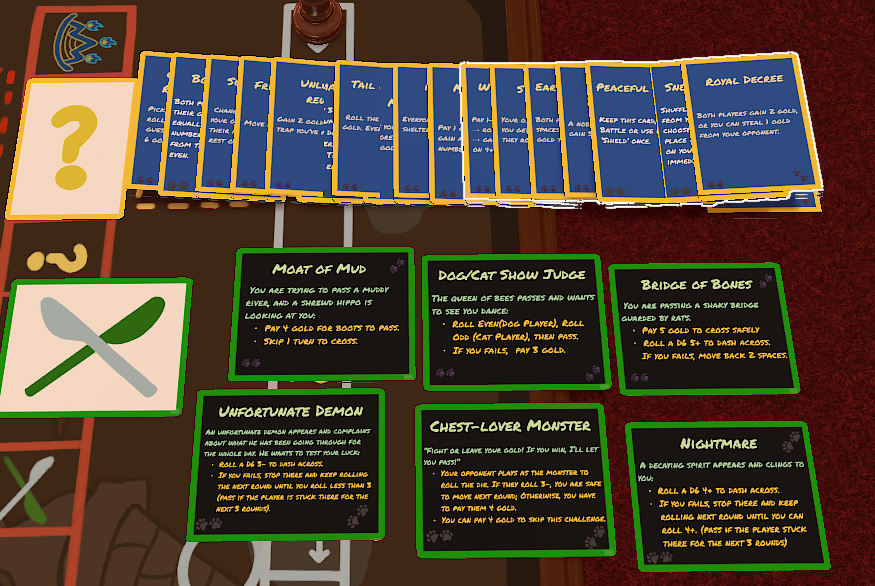
Goal: I wanted to create a unpreditable moment that is luck-based to increase the uncertainty of the game by giving them a range of random card that they must resolve them when they trigger.
Result: The Opportunity cards and Challenge card deck ensure the uncertainty of the game seen in Monopoly and other games.
Techniques
- Using randomized card decks so players cannot predict upcoming events or outcomes.
- Mixing positive and negative effects within the same deck to keep outcomes surprising.
- Forcing immediate resolution of cards to maintain tension and prevent planning around randomness.
Process Breakdown
1. Research, Ideation & Planning
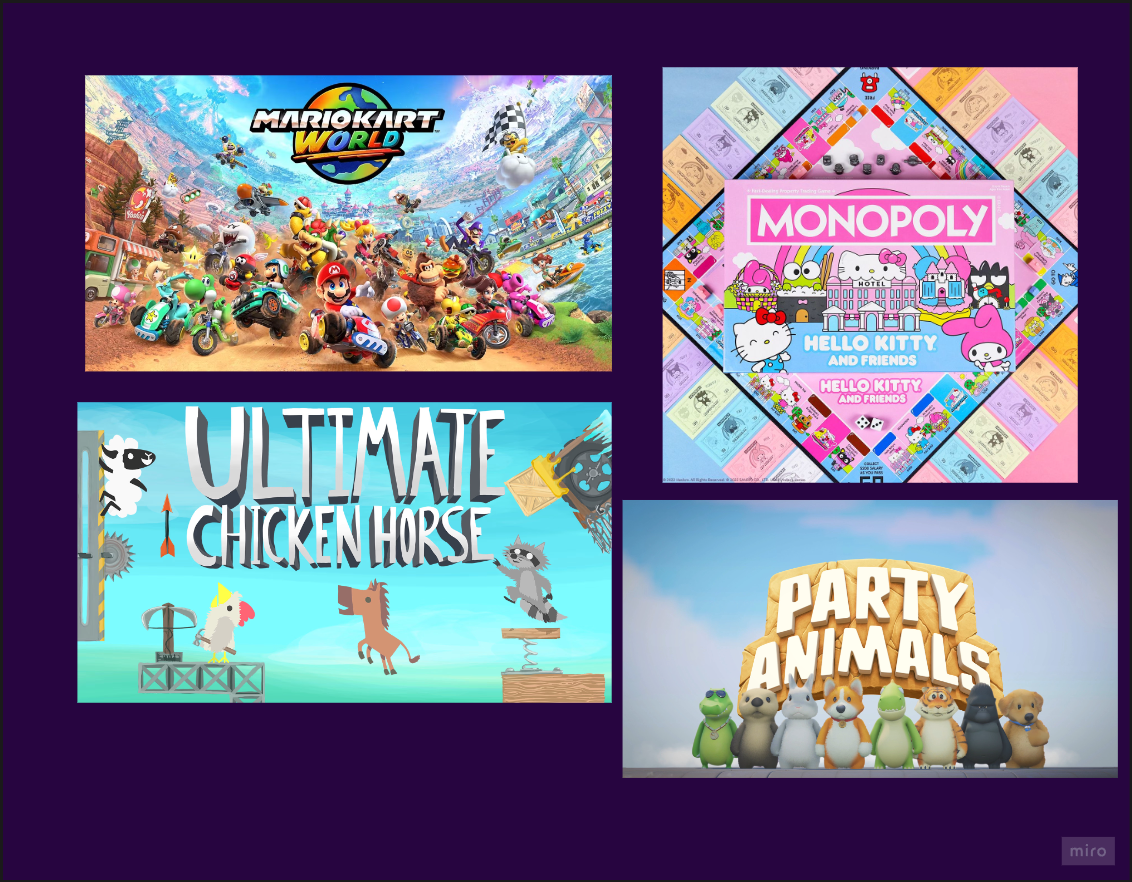
I wanted to create a competitive game that blends luck and strategy, while focusing on schemes and sabotage between players, all wrapped in an animal-themed setting.
- Analyzing Games: I drew inspiration from the event deck in Monopoly and the trap and sabotage mechanics from Ultimate Chicken Horse.
- Ideating Mechanics: What started as a simple racing game became more engaging and competitive by adding luck-based events and strategic decision-making.
- Reasonant Theming: The idea of fighting over a mysterious item to empower one’s kingdom and end a medieval war could be a strong and resonant theme for a racing game.
2: Design Document - Rulebook
Premise: I began by identifying the core mechanics and features I wanted to include in Bark & Meow. These included:
- Trap-setting mechanic that encourages players to scheme against each other.
- Racing mechanic that motivates players to reach the goal as quickly as possible.
- Event deck made up of Opportunity and Challenge cards that add uncertainty and difficulty along the path.
- A relatively peaceful path and a more challenging one, allowing for strategic decision-making.
Theme: I wanted to emphasize fierce competition and scheming while keeping the game cute and not overly stressful. This led me to a medieval fantasy setting, where two rival animal kingdoms compete for power. The goal is to race for a magical Triumph Crown to empower your kingdom by outsmarting your opponent, managing resources wisely, and making strategic choices.
3. Prototyping
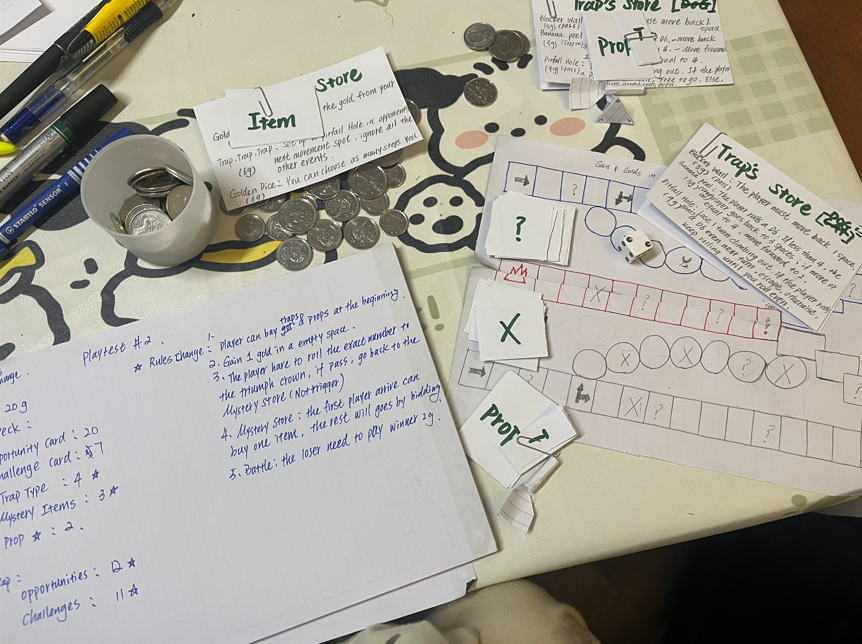
Paper Prototype
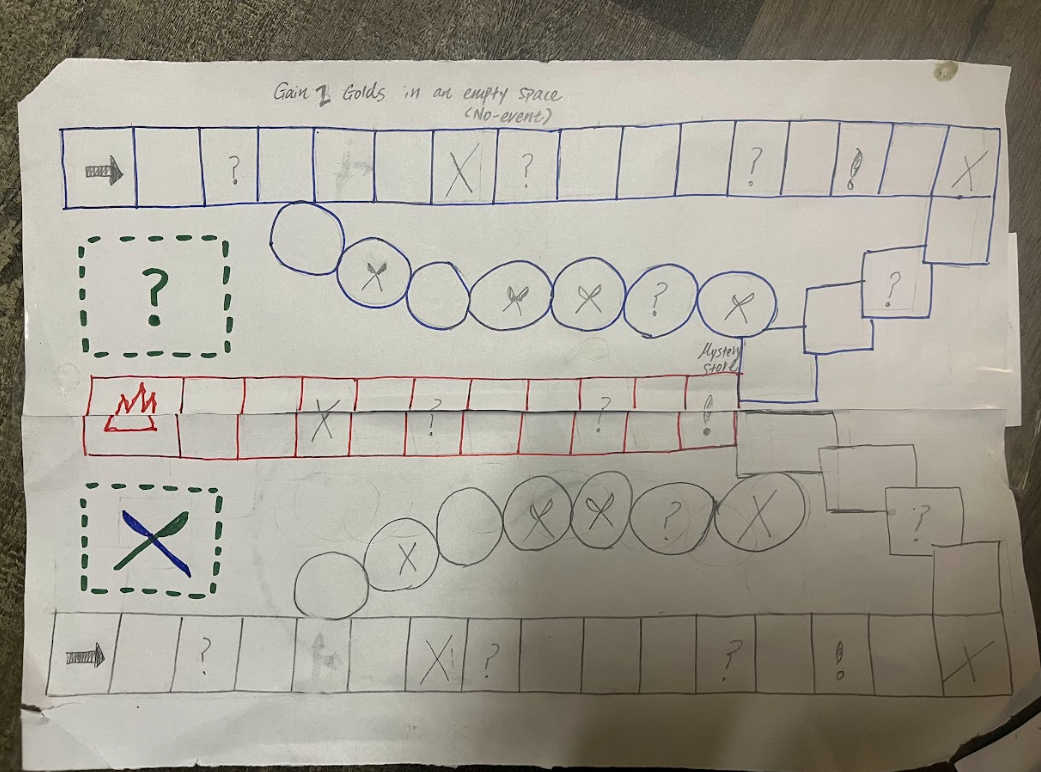
Result: I was initially uncertain about the appropriate amount of starting gold, so I adjusted it based on the possible costs and risks throughout the game.
Goal: Created a paper prototype to test how much gold players need over the course of a full game and ensure the economy stays balanced without feeling too scarce or overflowing.
Solution:
- I priced traps differently based on their power and function.
- I mapped out empty spaces and event spaces to estimate the minimum and maximum gold players could earn during a game.
- I played as both players using different playstyles to see how much gold could realistically be spent.
Rapid Prototype
Highlight #1
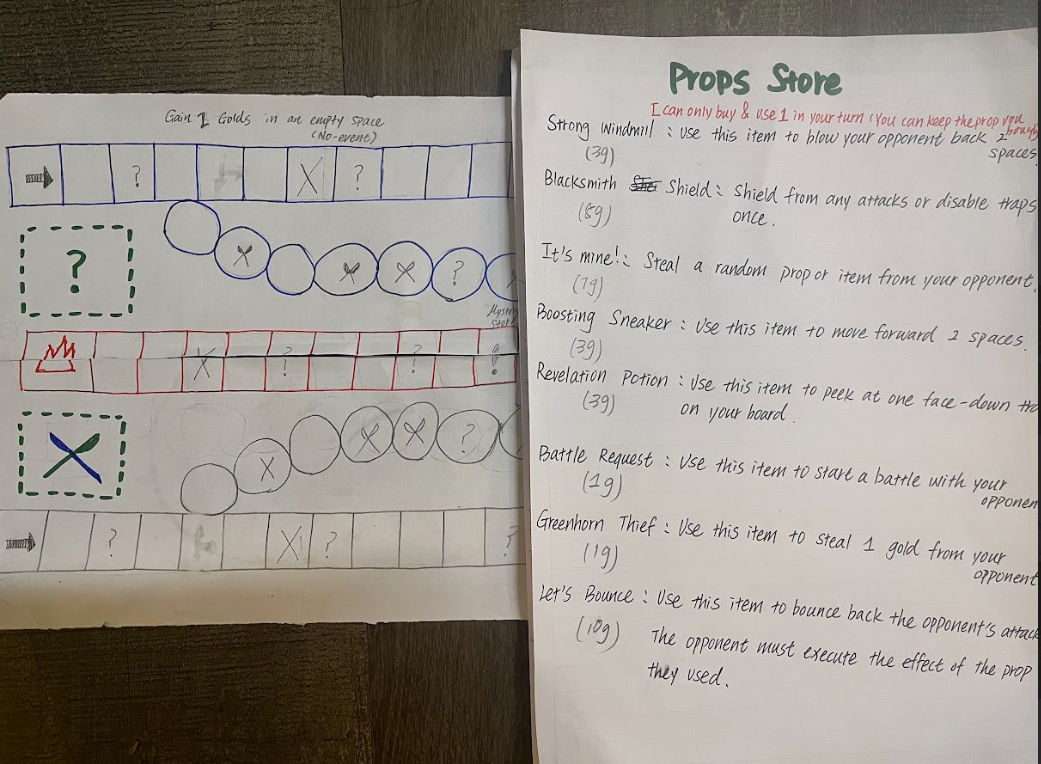
Result: The racing mechanic was overpowering the scheming mechanic, which led to reduced player interaction.
Goal: Shift the focus from simple racing to slowing down the opponent, creating a better balance between racing and scheming.
Solution:
- I added a battle mechanic that allows players to fight each other when they land on the same space once they reach the perilous path.
- I introduced a prop mechanic where players can buy and use limited items, creating a sense of dueling.
- I added several new traps with unique and interesting effects to encourage players to purchase and use them in the game.
Rapid Prototype
Highlight #2
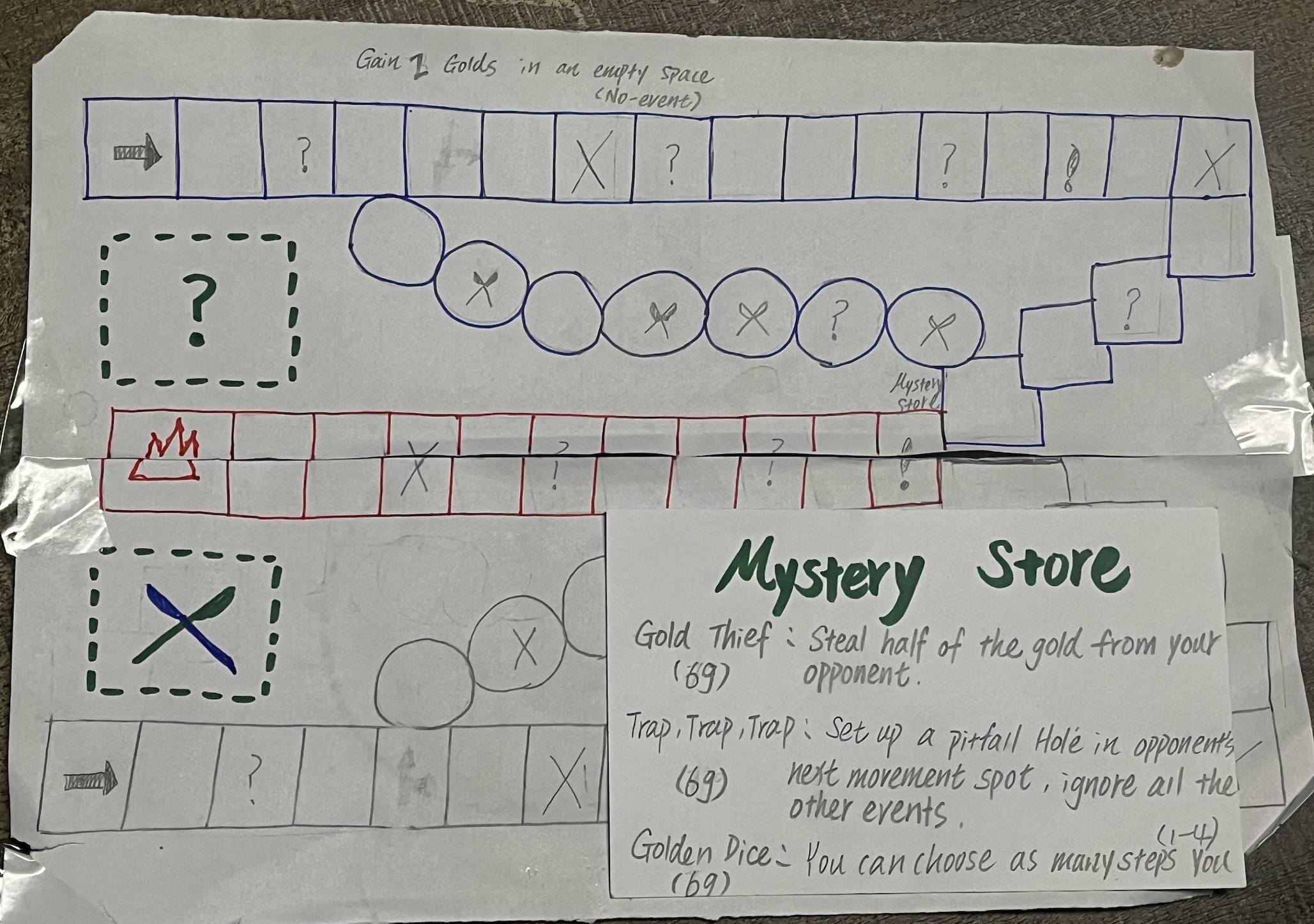
Result: The items in the Mystery Store were too expensive, causing players to skip this phase and reducing overall fun.
Goal: Encourage players to race to the Mystery Store by rewarding the first player with a chance to buy a powerful item and increasing engagement for both players.
Solution:
- Reduce item prices by half for the first player who reaches the Mystery Store as a reward.
- Add a sealed-bid auction for the remaining items, with bidding starting at 0 gold, to increase interaction and excitement.
4. The First Interactable
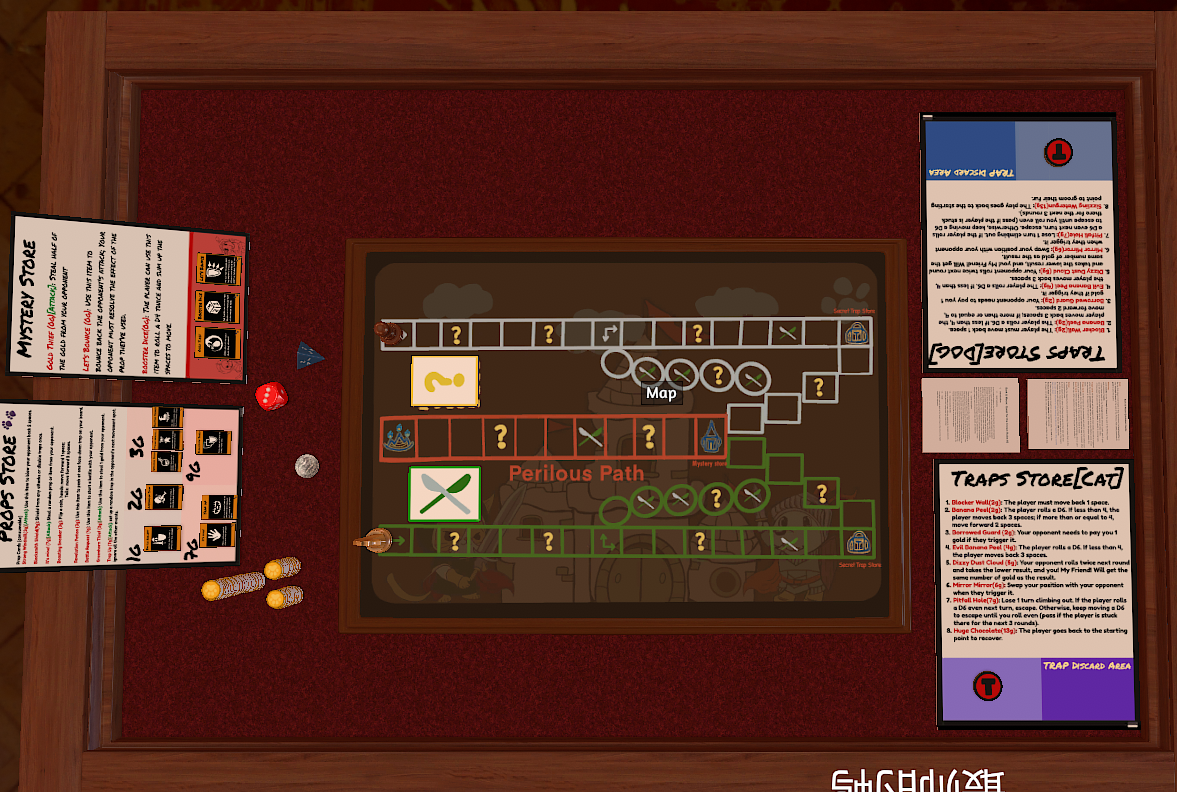
Result: I successfully blended board racing mechanics with a trap-setting scheming system, along with an event deck and a Mystery Store mechanic.
Goal: Build a playable prototype in Tabletop Simulator that includes all gameplay pieces and core systems.
Implementation:
- Mechanic Synergy 1: Players scheme against each other by purchasing and placing traps on their opponent’s board.
- Mechanic Synergy 2: I studied Monopoly, especially its event deck, to introduce uncertainty and varied outcomes into the game.
- Narrative Synergy: I was inspired by a group project, Shifting Kingdom, which showed how a medieval theme can be funny and lighthearted. This helped me balance a dark, intense backstory with a cute and playful world.
5: Playtest & Key Iterations
Playtest #1 Highlight
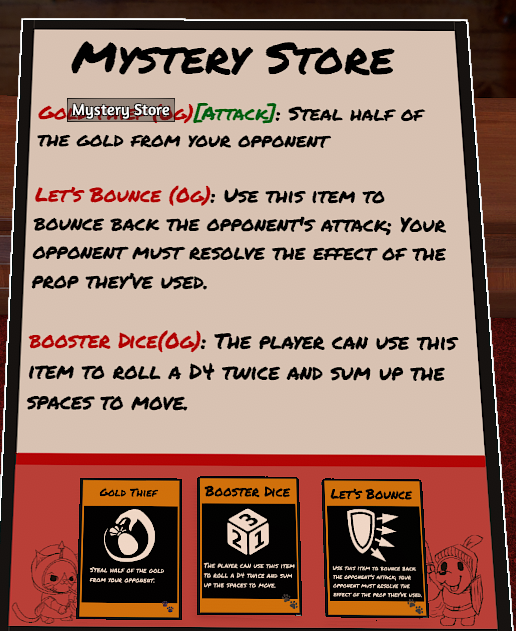
Result: Players were hooked by the trap mechanic and enjoyed scheming against their opponents. They also found the Opportunity cards interesting and fun to resolve.
Feedback & Problem: While players enjoyed the game overall, several issues appeared. Some rules were unclear, especially the trap-triggering rule—players misunderstood traps as being triggered by stepping on them instead of passing through them. Players also tended to ignore the Mystery Store because the rules felt too complicated, and the auction system did not work well when one player had very little gold.
Solutions: I clarified and simplified the wording of the rules and added a quick-start guide to help players learn the game more easily. I also changed the Mystery Store from an auction-based system to a free-item supply store to make it more accessible and engaging.
Playtest #2 Highlight
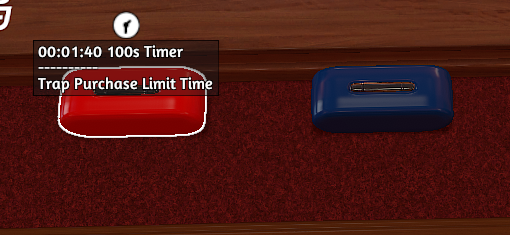
Result: Players enjoyed the game a lot, with plenty of laughter and unexpected twists during play. They learned the mechanics faster than in playtest #1, and the game ran more smoothly overall.
Feedback & Problem: Players highlighted the fun of the trap mechanic and the surprises created by the Opportunity cards. However, the game took too long during the trap-purchasing phase at the beginning, which slowed down the overall pace. Additionally, the peaceful path felt too disadvantageous because it was significantly longer than the challenging path.
Solutions: I added a timer to limit the time for purchasing and placing traps to keep the game moving. I also adjusted the map to make the peaceful path more balanced and comparable to the challenging path.
Playtest #3 Highlight
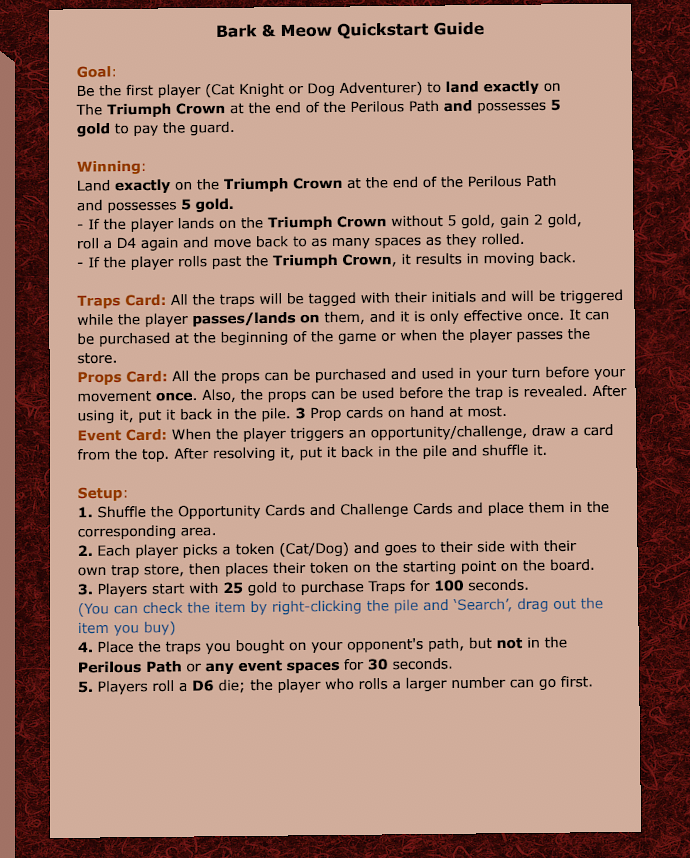
Result: The game ran smoothly, and players learned the rules quickly by following the step-by-step guide. They enjoyed the theme, felt immersed in their characters, and liked the mix of scheming and racing gameplay.
Feedback & Problem: Players said they would like to play again, but noted a few issues. The prop mechanic was somewhat confusing due to how it was set up, and players who fell behind found it difficult to catch up, even with the booster die.
Solutions: I simplified the prop mechanic so players can only purchase and use one prop on their turn, making it easier to track. I also adjusted the booster die so it can be reused if there is still a gap of six or more spaces when the opponent is on the perilous path, helping trailing players catch up.
6. Polished Portfolio Piece
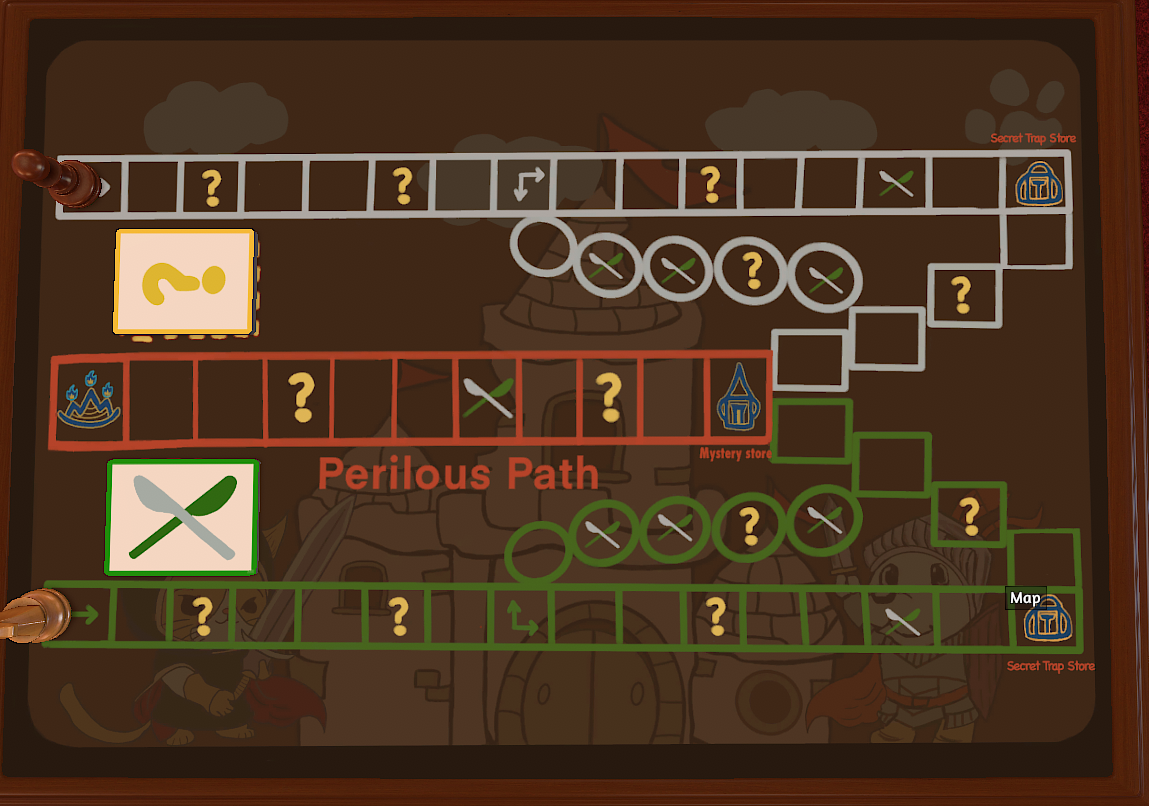
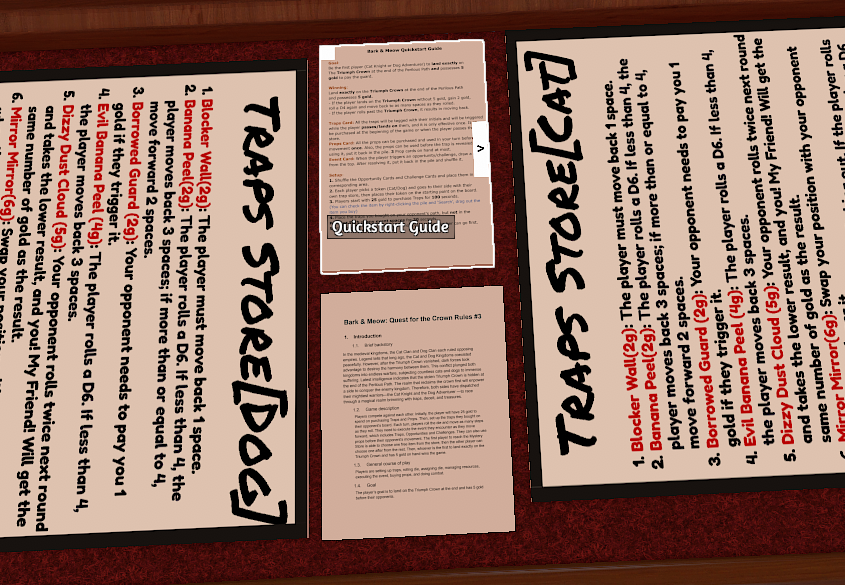
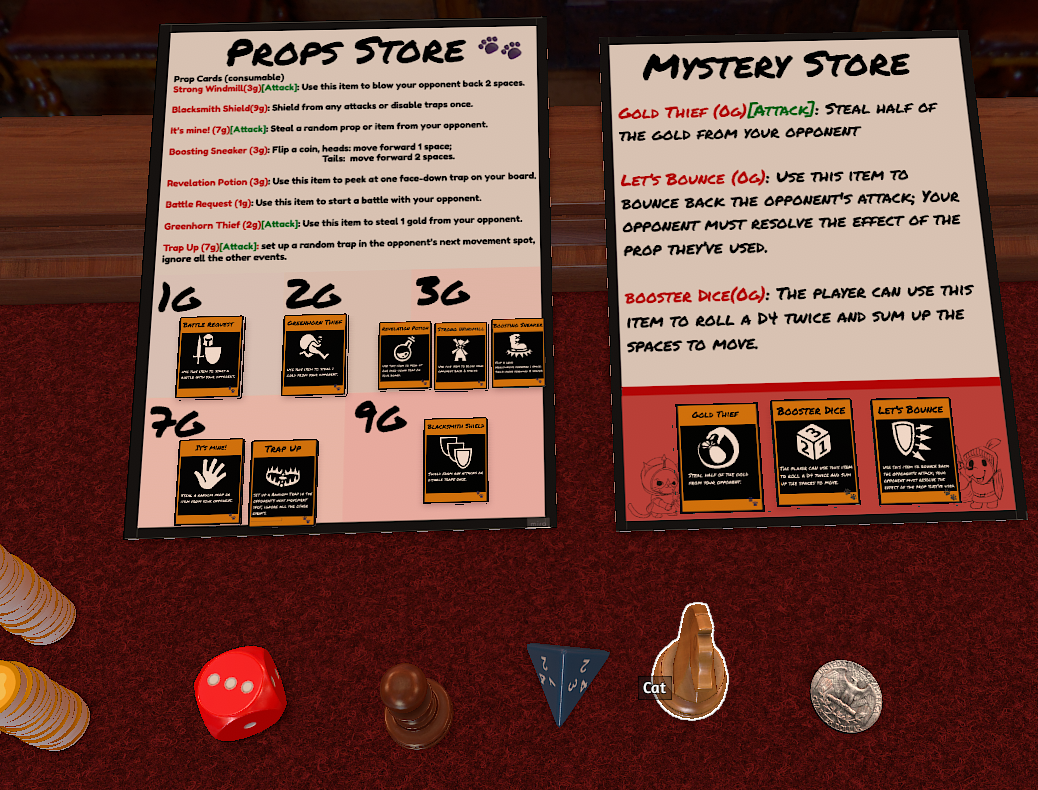
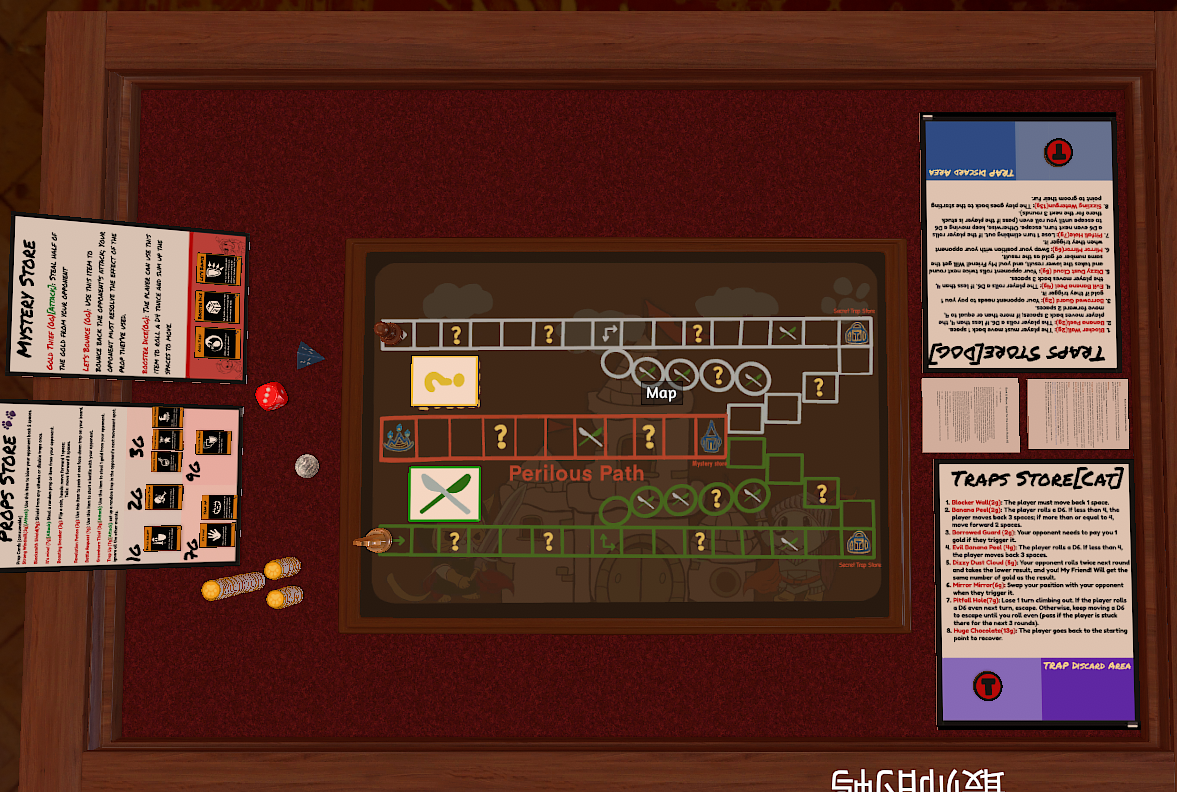
Results: A playable and enjoyable Tabletop Simulator project has been completed.
Goal: Create a well-balanced scheming and racing game that blends luck and strategy in Tabletop Simulator.
Execution:
- Surprise Events: I created an event deck that consistently surprises players with fun and unexpected outcomes.
- Scheming and Battle: I designed a trap-setting system that allows players to use skill and strategy while engaging in playful duels with each other.
- Luck and Skill Balance: I blended luck-based mechanics with strategic decision-making to keep players engaged through both unpredictable outcomes and tactical planning.